Workflow Ownership for Marketing AI
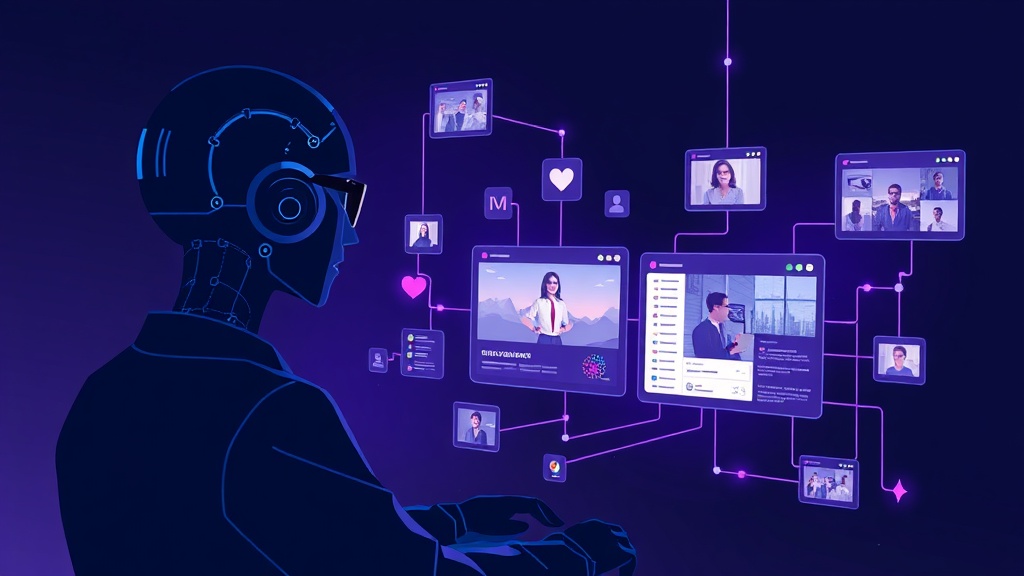
The interesting AI companies do more than assist an isolated task: they connect meaningful parts of a workflow. In marketing, that means joining brand context, channel selection, proposed actions, approval, execution, and learning—rather than treating every caption, email, or dashboard as a separate tool.
Key Takeaway: Marketing systems become useful when they connect the full learning loop: decide what to test, propose work, get the right approval, execute through the relevant channel, and use the result to choose the next step. The team stays accountable for the choices and boundaries.
The hardest part of building AI products isn’t the model. It’s deciding which workflow you’re willing to own.
That insight comes from Aatish Nayak (VP of Product at Harvey) and Sachi Shah (Product Manager at Sierra), speaking on Kleiner Perkins’ Builders series. Both are building AI that doesn’t assist workflows—it runs them.
We’ve been thinking about the same thing. Not for legal. Not for customer experience. For marketing.
The Workflow Ownership Thesis
Harvey started by owning a single legal workflow: transactional corporate work. High volume, repetitive, contained data. Then they expanded—from Q&A on a few documents to analyzing thousands, enabling collaborative AI tools across entire legal teams.
Sierra took a similar path in customer experience. They didn’t build a chatbot. They built the infrastructure for CX teams to deploy autonomous agents, measured by customer outcomes like “time to music” for Sonos—not tickets closed.
The pattern is clear: connect the parts of the workflow that matter, rather than adding a feature inside someone else’s process. For marketing, that means preserving the team’s ownership while connecting channel selection, proposed work, approval, execution, and learning.
Both companies report the same discovery: once you give users workflow-level AI, they find use cases you never anticipated. Harvey’s customers went from legal review to investor presentations. Sierra’s agents went from support tickets to proactive customer engagement. The same pattern is playing out in customer support, where Pylon (YC W23, $51M Series B) is replacing Zendesk for B2B companies by owning the entire support workflow — not just the ticket, but the resolution — and has grown 5.35x in the last year to over 1,000 customers.
As Nayak puts it: “Traditional product management says, pick a user, pick their use case, make it super narrow. With AI, you can actually broaden out.”
What This Means for Marketing
Most marketing AI tools are features. Generate a caption. Write an email. Analyze a dashboard. They sit inside someone else’s workflow—your workflow—and make one step faster.
That’s theme one from a16z’s framework: traditional software going AI-native. Useful, but not transformative.
The workflow ownership thesis says something different: the AI that owns discovery, planning, and execution across the entire marketing function will win.
Not a writing tool. Not a scheduling tool. Not an analytics dashboard. A system that:
- Helps identify channels worth testing for your brand
- Prepares work in the context of your brand foundation
- Executes approved actions through the selected channels
- Learns from results and informs the next decision
- Makes evidence gathering cheaper and quicker
That’s the workflow Lane owns.
Re-Earning Attention in Real Time
One of the most striking quotes from the conversation: “You have to constantly re-earn product-market fit. Customer expectations change.”
The same is true for brand attention. You don’t earn mindshare once—you re-earn it every day, in every channel, in every conversation that matters.
Here’s where this gets interesting.
This very blog post is a reaction to a video published two days ago. We watched the conversation, identified the marketing implications, and published our take. That’s a manual process today. It took human judgment, writing, and editorial decisions.
But what if it didn’t have to be?
The Real-Time Brand Commentary Thesis
Imagine an AI CMO that doesn’t just execute scheduled campaigns—it watches.
It can help the team investigate conversations that matter to the brand: industry podcasts, influencer posts, conference talks, competitor announcements, and regulatory changes. When a signal is relevant, it can draft a reaction that positions the brand in the conversation and bring it forward for the appropriate approval.
Not spam. Not generic comments. Substantive, brand-aligned commentary that introduces how your product relates to what was just discussed.
This is the difference between broadcasting and participating.
| Traditional Marketing AI | Real-Time AI CMO |
|---|---|
| Schedules posts on a calendar | Joins conversations as they happen |
| Creates content from prompts | Creates content from context |
| Reacts to your instructions | Reacts to the market |
| Operates in your channels | Operates in your audience’s attention |
Sachi Shah’s framing applies perfectly here: you need an “agent development life cycle” for marketing—where AI agents are built, tested, deployed, and improved based on real outcomes. Not just content generation, but context-aware brand participation.
The Error Budget Principle
Shah makes another point that resonates: “SRE teams work with error budgets because we’ve understood that 100% reliability is not really a goal. The same is true with agents.”
This is critical for marketing AI. The question is not whether every action should be automatic. It is which actions have enough context and low enough risk to run within a team-defined boundary, and which require review.
A human CMO does not get every post perfect either. But marketing judgment is not a generic error budget: the consequence of getting a public action wrong depends on the brand, audience, and moment. Lane makes that trade-off explicit through approval gates.
The Forward-Deployed CMO
Both Harvey and Sierra emphasize the role of forward-deployed engineers—experts embedded with customers who deeply understand their workflows and feed insights back to the product.
Lane takes this concept and makes it the product itself. Lane is a forward-deployed CMO—embedded in your brand, understanding your voice, your audience, your competitive landscape. Every interaction generates data that makes the next campaign more effective.
The difference: Harvey’s FDEs are human. Lane’s forward-deployed marketing intelligence is AI—which means it scales to every customer without marginal cost.
What This Means for 2026
-
Connected workflow beats isolated features. The value is in linking discovery, creation, approved distribution, measurement, and learning—not in pretending a team should disappear from the loop.
-
Real-time reaction is the next traction channel. Brands that join conversations as they happen—not days later—will capture disproportionate attention. This isn’t newsjacking. It’s systematic, brand-aligned participation powered by AI that understands context.
-
Clear boundaries make automation useful. Teams can move routine, low-risk work faster while reserving sensitive, strategic, or public decisions for review.
-
Your brand data is your moat. Just as Harvey’s legal data and Sierra’s CX data make their products more defensible, your brand DNA—voice, audience response patterns, channel performance—becomes a moat that no competitor can copy.
-
Broaden the search before narrowing the spend. The old playbook says find one channel and double down. A better starting point is to make disciplined, bounded tests across plausible channels, then let evidence decide where expert attention and budget belong.
Lane helps teams run that learning loop with approval at the gate. See how the Traction Engine works.
References
- Aatish Nayak (Harvey), Sachi Shah (Sierra) — “What Product Leaders Must Rethink in the AI Era” (Kleiner Perkins Builders, Feb 2026)
- Harvey — AI-powered legal workflow platform
- Sierra — AI-powered customer experience platform
- Related: Software Is Eating Marketing Labor — Our response to a16z’s AI opportunity thesis
- Related: The 19 Traction Channels Explained — Why most businesses use 3-4 channels when 19 exist